

7 Tips for Buying Furniture While Renting in 2026
Table of Contents
- Tips for Buying Furniture While Renting: Start With Your Lease
- Essential Furniture for First Apartment: What to Buy First
- Furniture for Small Apartments: Measure Before You Buy
- Furniture That Is Easy to Move (and Easy to Resell)
- Furniture Rental Hidden Fees to Check Before You Sign
- Durability, Materials, and Repairability at Every Price Point
- Budget Moves That Keep Resale Value
- Frequently Asked Questions
Last Updated: October 18, 2026
Tips for Buying Furniture While Renting: Start With Your Lease
Buying furniture while renting is a decision about time, not taste. The average renter household moves more often than a homeowner, and every piece you buy has to survive that move or pay for itself before you leave. The tips for buying furniture while renting below start with the one number that decides everything else: how long you will stay.
Length of Stay and the Break-Even Point
The break-even point is the month when the total cost of buying a piece drops below the total cost of renting the same piece. If a sofa costs $199.99 to buy and a rental contract runs about $40 a month with a $60 delivery fee, you break even around month seven. Below that line, rental wins on cash. Above it, buying wins, and every extra month is money back in your pocket. Write your expected lease term on paper before you shop. If you plan to renew, buying almost always wins.
Upfront Cost vs. Monthly Payment
Rental contracts look cheaper because the cost is split into monthly payments. The upfront cost of buying is real: a sofa, a coffee table, and a bed frame can clear $400 in one weekend. Balance it against the monthly payment you avoid. A $99.99 lift-top coffee table that lasts three moves costs less than a year of rental fees on a comparable piece. Budget for the upfront hit, then stop paying rent on furniture you could own.

Essential Furniture for First Apartment: What to Buy First
Essential furniture for a first apartment comes down to four pieces: somewhere to sleep, somewhere to sit, somewhere to eat, and somewhere to put things. Buy in that order. A bed frame, a sofa or loveseat, a small dining setup, and a storage bench cover daily life. Everything else, from side tables to decor, can wait until you know how you actually use the space. We recommend buying the sleep and sit pieces new for durability, then filling gaps with other finds.

Furniture for Small Apartments: Measure Before You Buy
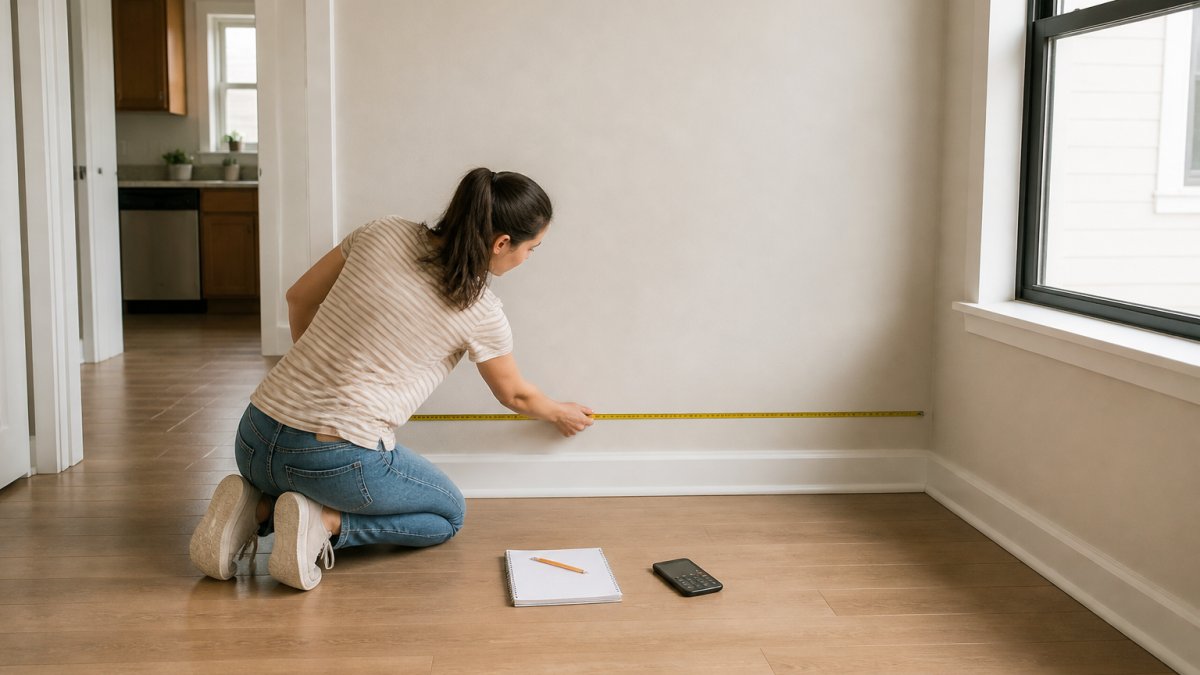
Furniture for small apartments fails on measurements, not style. Most guides tell you to measure the wall. The renters who avoid returns measure the entire path from the store to the spot where the piece will live, and they do it before they order.
Measure the room, then the route
Write down four numbers for every wall: length, height to the nearest outlet or window sill, clearance in front of doors, and clearance to the nearest heat source or radiator. A sofa that fits the wall but blocks the closet is the wrong sofa. Tape the footprint on the floor with painter's tape and stand in the rectangle. If it feels tight now, it will feel tighter with a coffee table in front of it.
The access checklist
A 48-inch coffee table is easy to buy and hard to get through a 30-inch door. Before you order, measure and record:
- Front door width and height: the narrowest point of the entry, with the door open.
- Interior doorway widths: every door between the entry and the room.
- Hallway width: the tightest corridor, measured wall to wall.
- Stairwell width and turn radius: the landing at the top of the stairs is where most deliveries fail.
- Elevator opening and interior depth: if the building has one, measure the door opening and the diagonal depth inside.
- Turn radius at corners: the diagonal a piece must clear when pivoting around a corner.
If a piece will not fit, you face a return, a restocking fee, or a delivery team that leaves it in the lobby. Ask about the delivery fee and whether the carrier brings the piece inside or drops it at the curb.
Use the floor plan, not just the wall
Sketch the room to scale on graph paper or in a free floor-plan app, then cut paper templates for each piece you are considering. Move the templates around before you buy. This catches the two most common renter mistakes: a rug that is too small for the seating arrangement, and a dining table that leaves no walking path to the kitchen. Leave at least 30 inches of clearance for main walkways and 36 inches around a dining table you plan to pull chairs out from.
Delivery logistics for renters
- Curb drop vs. inside delivery: curb drop is cheaper but adds your own labor and risk of damage in the stairwell.
- Building rules: some rentals require a certificate of insurance from the delivery company or restrict delivery hours. Check the lease before scheduling.
- Elevator reservation: many buildings require a scheduled elevator slot for large deliveries; book it before the delivery date.
- Assembly service: worth the fee for anything with more than a dozen bolts, especially if you lack tools or a second pair of hands.
Furniture That Is Easy to Move (and Easy to Resell)
Furniture that is easy to move shares three traits: it comes apart, it is light enough for two people, and it has legs you can unscrew. Look for pieces that assemble with bolts rather than glue, and keep the hardware bag labeled and taped to the underside. A slim shoe cabinet at 136.8 pounds is sturdy but heavy; a 30.9-pound storage bench moves in one trip. Light, modular pieces also hold resale value because the next renter can actually carry them out.
Farmhouse Upholstered Storage Bench with Hidden Compartment, Entryway Shoe Bench →

- Bolted, not glued: disassembles for the move and reassembles in the new place
- Under 50 pounds: manageable for two people on a stairwell
- Neutral finish: resells faster than a bold color
- Standard sizes: fits the next apartment's walls as well as this one's
Furniture Rental Hidden Fees to Check Before You Sign
Furniture rental hidden fees decide whether a contract is worth signing. Read the agreement for these five charges before you commit:
- Delivery and pickup fees: often charged twice, once in and once out
- Early termination penalty: what you owe if you move before the term ends
- Damage liability: how normal wear is judged and what you pay for it
- Cleaning or restocking charges: added at return
- Minimum term and auto-renewal: the clause that locks you in for another cycle
Durability, Materials, and Repairability at Every Price Point
Durability comes down to materials and how they are joined. Engineered wood and MDF cannot be re-glued once the joints loosen. Solid rubber wood legs and steel frames last through multiple moves. At the low end, particleboard is fine for a bookshelf but wrong for a sofa frame. At every price point, repairability matters more than a warranty: replaceable legs, standard bolts, and washable covers keep a piece alive. Check the frame material in the listing before you fall for the finish.
| Material | Best For | Watch Out For | Move-Friendly? |
|---|---|---|---|
| Solid rubber wood | Legs, frames, benches | Heavier pieces | Yes, with bolt assembly |
| Engineered wood / MDF | Tables, cabinets, shelving | Swelling if wet | Yes, if kept dry |
| Steel frame | Sofa and desk support | Weight | Yes, disassembles |
| Particleboard | Budget shelving | Loose joints after moves | Limited |
Budget Moves That Keep Resale Value
Resale value protects your budget when you move. Neutral colors, standard dimensions, and solid joinery sell fastest on local sales and community groups. Keep original hardware, save the assembly instructions, and photograph the piece before you list it. Gently used furniture with clean lines resells in days; a scratched, oversized piece sits for weeks. We recommend buying neutral, durable pieces first and adding color through textiles you can pack in a box.
Our Farmhouse Upholstered Storage Bench with Hidden Compartment ($79.99) shows the pattern: neutral finish, solid rubber wood legs, a hidden compartment that survives a move, and a shape that fits an entryway in any apartment. Pair it with our 48" Farmhouse Lift Top Coffee Table ($99.99) for storage that earns its footprint.
Frequently Asked Questions
Is it better to buy or rent furniture when you rent an apartment?
It depends on how long you stay. Rental furniture carries low upfront cost but adds a recurring monthly payment, delivery and pickup fees, and damage liability. Buying furniture builds resale value and you keep it when you move. If you plan to stay 12 months or more, buying usually costs less overall; for shorter stays, renting can be cheaper than buying and reselling. Run the numbers on your lease term before deciding.
What furniture should renters buy first?
Start with the pieces you use daily: a bed frame and mattress, a sofa or loveseat, a table with chairs, and storage for clothes and shoes. Add a coffee table and side table once the layout is set. Buying furniture in this order keeps you functional from move-in day and spreads the upfront cost over a few paychecks instead of one large hit.
How do I measure furniture before buying it for a rental?
Measure the room's usable wall space, then measure doorways, hallway width, stair turns, and elevator clearance. Compare those numbers to the product's assembled dimensions and its box dimensions, since a sofa can fit a room but not the stairwell. Add 2 to 3 inches of buffer for baseboards and door swing. Keep a furnishing checklist with room dimensions on your phone while shopping.
What hidden fees should I check in a furniture rental contract?
Ask for the total cost of the full lease term, not just the monthly payment. Check delivery and pickup fees, damage liability and normal wear exclusions, early termination penalties, late payment charges, and whether you must keep the furniture for a minimum term. Also confirm what happens if you move mid-lease. A rental can look affordable monthly and still cost more than buying once fees are added.
What furniture is easiest to move between apartments?
Look for pieces that break down or roll: storage benches, side tables with brake wheels, modular shelving, and hall trees that assemble with basic tools. Avoid oversized sectionals and heavy solid-wood dressers that need two people and a truck. Lighter engineered wood and metal-frame pieces move easily, and neutral colors resell faster on local marketplaces when you relocate.
The hard part of buying furniture while renting is not picking a style. It is guessing how long you will stay and paying for the wrong timeline. Payless Home Goods stocks affordable, move-friendly pieces with the specs listed up front, so you can check frame material, weight, and dimensions before you commit. Browse our storage benches, coffee tables, and sofas, and furnish the apartment you have without overpaying for the one you might leave. View all.