

How to Furnish an Apartment on a Budget
Table of Contents
- How to Furnish an Apartment on a Budget: The Strategy
- Set a Realistic Budget and Stick to It
- Essential Apartment Furniture Checklist
- Best Places to Buy Affordable Furniture
- Measure Your Space and Plan the Layout
- How to Save Money on Home Decor
- Smart Moves for Moving Day and Assembly
- Your First Apartment Furnishing Plan
- Frequently Asked Questions
Last Updated: September 9, 2026
How to Furnish an Apartment on a Budget: The Strategy
Furnishing a first apartment often feels like a financial trap, but learning how to furnish apartment budget items is more about strategy than sacrifice. Most renters buy everything in the first week, panic about costs, and end up with pieces that don't fit or don't last. The smarter approach treats your space as a layered project: prioritize essentials, hunt for value, and upgrade over time.
A successful plan rests on three pillars: a firm budget split by room, a clear list of non-negotiable essentials, and the patience to source pieces from multiple channels. Below, we'll walk through a room-by-room strategy, the best places to shop, and the logistics that usually trip people up.
Set a Realistic Budget and Stick to It
A realistic budget starts with your total available cash, not a wish list. Decide what you can spend without touching your emergency fund, then allocate that amount by room priority. A common split is 40% living room, 30% bedroom, 20% dining area, and 10% decor and lighting, but adjust based on where you spend your time (extension.umn.edu).
Buy cheap, disposable furniture for items you'll replace in two years, but invest in a quality mattress and a sturdy sofa frame that will survive multiple moves. Budget allocation is easier when you separate these categories early.
A Tiered Budget Calculator for First-Time Renters
Instead of a one-size-fits-all percentage, use a tiered approach based on your total budget, assuming a 1-bedroom apartment (approx. 700 sq ft) and a focus on essential pieces first:
Tier 1: The Bare Bones (Under $1,000 total)
- Mattress: $200-$400. Your #1 investment. Look for a quality queen-size from a direct-to-consumer brand like Zinus or Tuft & Needle, or check open-box deals at Wayfair or Amazon.
- Bed Frame: $50-$150. A simple metal or platform bed from Amazon or Walmart is fine. Skip the headboard.
- Sofa: $200-$400. A used solid-wood frame sofa on Facebook Marketplace or a floor model. Avoid particleboard.
- Dining Table + 2 Chairs: $100-$200. A folding table and chairs from IKEA or a thrift store set works.
- Storage: $50-$100. Start with a plastic dresser or storage bins from Target.
- Lighting & Decor: $50-$100. A floor lamp and throw pillows make a space feel like home.
Tier 2: The Comfortable Upgrade ($1,000-$2,500 total)
- Mattress: $400-$700. Invest in a hybrid or memory foam mattress from Casper or Purple. You'll keep it 7-10 years.
- Bed Frame: $150-$300. Upgrade to a solid wood or upholstered frame.
- Sofa: $400-$800. A new sofa from IKEA or Article, or a higher-end used piece. Check for kiln-dried hardwood frames and quality cushion fill.
- Dining Table + 4 Chairs: $200-$400. A solid wood thrift table or a new discount set.
- Dresser: $100-$250. A solid wood second-hand or IKEA dresser.
- Lighting & Decor: $150-$300. Add a rug, curtains, and wall art.
Tier 3: The Polished Home ($2,500+ total)
- Mattress: $700+. A premium mattress that fits your sleep style.
- Sofa: $800+. A high-quality sofa from West Elm or Crate & Barrel, or a vintage designer piece.
- Dining Set: $400+. A statement table and chairs.
- Storage: $250+. Matching dresser and nightstands from a quality brand.
- Lighting & Decor: $300+. Layered lighting, art, and textiles.
The 'Temporary vs. Investment' Decision Framework
Use this simple test for every piece you consider:
- Will I use this daily for 5+ years? If yes, it's an investment piece. Splurge on quality (mattress, sofa, dining table).
- Will I replace this in 1-2 years? If yes, it's a temporary piece. Save money and buy the cheapest functional option (decor, coffee table, bookshelves).
- Will this survive a move? Solid wood and metal frames do. Particleboard and cheap upholstery often don't. If you plan to move in the next 2 years, factor that into your decision.
Essential Apartment Furniture Checklist
The essential apartment furniture checklist starts with what you need to function on day one: a place to sleep, sit, eat, and store belongings. Everything else is a later upgrade. A mattress on the floor works temporarily, but a couch is harder to improvise.
Must-Haves for the Living Room
The living room needs three core pieces: a sofa or large armchair, a coffee table or ottoman, and a media console or shelving unit. For small spaces, multi-functional furniture is non-negotiable. A storage ottoman doubles as seating and blanket storage, while a console table can serve as a desk.
Bedroom and Dining Area Basics
Bedroom basics are simple: a bed frame, a mattress, and a dresser or wardrobe, plus blackout curtains if you work shifts or face a bright street. For the dining area, a small table with two chairs covers most renters, but a foldable table against the wall frees floor space.
Best Places to Buy Affordable Furniture
The best places to buy affordable furniture are not always furniture stores. A mix of sourcing channels gives you the widest selection at the lowest prices. Start with online discount retailers, then layer in second-hand marketplaces and thrift store finds for character pieces.
- Online discount retailers for new furniture at reduced prices
- Second-hand marketplaces like Facebook Marketplace and Craigslist
- Thrift stores and estate sales for unique, solid-wood pieces
- Warehouse clearance sections for floor models
- Seasonal sales events at mainstream retailers
When buying second-hand, check drawer glides, inspect joints for wobble, and sit on every upholstered piece. Solid wood pieces with good bones are worth refinishing; particleboard with water damage is not worth hauling home.
The Hidden Costs of 'Cheap' Furniture
The biggest trap in budget furnishing isn't the sticker price, it's the logistics. A $40 thrift store dresser is a steal until you realize it won't fit in your sedan. Before you commit to any large second-hand find, calculate the total cost of ownership:
- Transportation: Rent a pickup truck from Home Depot for $129 for 75 minutes, or budget for a friend with a truck (homedepot.com). Factor this into the 'deal' before negotiating.
- Delivery fees: Online retailers often charge $50-$150 for white-glove delivery. Always check the final price at checkout before comparing.
- Assembly time: Flat-pack furniture requires tools and time. If you don't own a cordless drill, that $99 bookshelf might cost an extra $30 for a basic model.
- Disposal costs: When you replace a cheap piece, you'll pay to get rid of it. Many municipalities charge $20-$40 for bulk pickup.
Negotiation Tactics That Work
On Facebook Marketplace and Craigslist, prices are often inflated by 15-20% to leave room for haggling. Use these tactics:
- Bundle and save: Offer to take multiple pieces for a lower total price. Sellers prefer one transaction.
- Point out flaws: Mention a scratch or wobbly leg politely and offer a lower price.
- Cash is king: Offer cash and be ready to pick up immediately for a quick, hassle-free sale.
- Check for price drops: Many sellers drop prices after a week. Save items and check back.
Sustainable Sourcing: The Circular Economy Angle
The smartest budget move is also the most sustainable: sourcing from the circular economy, buying used, upcycling, and swapping instead of always buying new. Here's how:
- Facebook Marketplace and Craigslist: Set up alerts for keywords like 'solid wood dresser' or 'mid-century sofa' to catch new listings first. The best deals go fast.
- Thrift stores and estate sales: Goodwill, Salvation Army, and consignment shops often have solid-wood pieces at rock-bottom prices. Estate sales are goldmines for older, well-built furniture. Check estatesales.net for upcoming sales.
- Buy Nothing groups: These hyper-local Facebook groups give away items for free. You can often find furniture that just needs a little TLC.
- Upcycling potential: A piece with good bones but an ugly finish is your best friend. Chalk paint, new hardware, and a weekend can transform a $20 find into a statement piece. Look for solid wood and avoid particleboard.
Measure Your Space and Plan the Layout
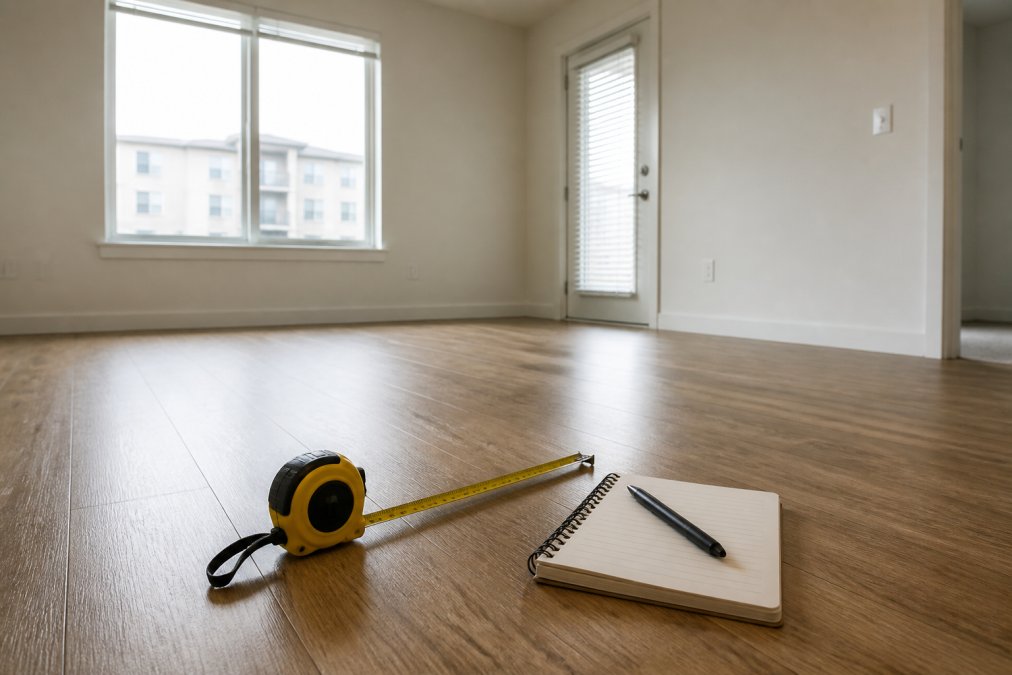
Space planning prevents the most expensive mistake in apartment furnishing: buying a sectional that blocks the doorway or a dresser that won't fit up the stairs. Start with floor plan measurements of every room, including door widths, window placements, and ceiling height. Sketch the layout on graph paper or use a free room planner app before you shop.
Leave at least 24 inches of walking space between large pieces, and measure your building's hallways and elevator dimensions before committing to oversized items (ada.gov). A $40 thrift store couch is no bargain if you need to rent a truck and pay friends in pizza to haul it upstairs.
How to Save Money on Home Decor
How to save money on home decor comes down to styling tricks that cost little but deliver a high-end look. Textiles do the heavy lifting: throw pillows, area rugs, and curtains instantly warm a space and hide worn rental floors. Swap builder-grade lighting for floor lamps and warm bulbs you can take with you.
DIY Restoration and Upcycling Projects
Upcycling projects turn budget finds into statement pieces. A coat of chalk paint resurrects a scratched nightstand, and new hardware modernizes an outdated dresser for the cost of a few handles. For a minimalist aesthetic, sand and whitewash a thrifted wooden table. These projects require basic tools and a weekend, but deliver furniture with character no big-box store can replicate.
Smart Moves for Moving Day and Assembly
Flat-pack assembly goes faster with a cordless drill, a rubber mallet, and a second person. Set aside an afternoon per large piece, lay out all hardware before starting, and follow the instructions in order.
Measure your vehicle's cargo space before committing to a purchase. Many second-hand sellers won't hold items, so rent a pickup truck for a few hours if needed. When buying new, factor shipping and delivery costs into your price comparison.
Your First Apartment Furnishing Plan
A realistic furnishing plan unfolds over three phases rather than one exhausting weekend. Phase one: buy the sleep, sit, eat, and store essentials. Phase two: add lighting, rugs, and wall decor. Phase three: replace temporary pieces with investment items as your budget allows.
This phased approach also protects your resale value. Quality investment pieces hold value, while cheap furniture ends up at the curb. For rental-friendly decor, use removable adhesive hooks and command strips instead of drilling, and keep original hardware for fixtures you swap out.
| Phase | What to Buy | Timeline | Budget Share |
|---|---|---|---|
| Phase 1 | Bed, mattress, sofa, table, storage | First 2 weeks | 60% |
| Phase 2 | Lighting, rugs, curtains, decor | Month 1-2 | 25% |
| Phase 3 | Upgrades, accent pieces, art | Month 3+ | 15% |
The key is to furnish apartment budget items in the right order and resist the urge to fill every corner immediately. A curated, spacious home beats a cluttered one every time.
For shoppers who want new furniture without the retail markup, Payless Home Goods offers significant discounts on home and outdoor pieces, with a wide variety of styles from modern to farmhouse. The convenience of online shopping means you can compare options and check shipping costs before committing.
Frequently Asked Questions
How much should I budget for furnishing a new apartment?
A realistic starting budget for essential furniture is $1,000 to $3,000, depending on your space and quality standards. Focus on a few key investment pieces like a sofa and mattress, and buy the rest second-hand or from discount retailers. Prioritize your apartment furniture checklist to avoid overspending on non-essentials before you have the basics covered.
What are the first things you should buy for a new apartment?
Start with items for sleeping, sitting, and eating: a bed and mattress, a sofa or armchair, and a table with chairs. You also need basic lighting and storage solutions to make the space functional. This core apartment furniture checklist gives you a livable home immediately, so you can take your time finding decor and accent pieces.
How can I furnish an apartment for under $1000?
It takes patience and a mix of sources. Buy the big items like a sofa and bed frame used from second-hand marketplaces and thrift stores. Spend your new-item budget on a quality mattress for safety and comfort. Use flat-pack furniture for storage and focus on DIY assembly to avoid delivery fees. This approach covers your essential checklist without exceeding your budget.
Where is the best place to buy affordable, high-quality furniture?
The best strategy is to mix sources. Online discount retailers like Payless Home Goods offer new furniture at lower prices. For unique finds, check second-hand marketplaces and thrift stores. To judge quality, inspect the joinery and materials in person when possible, and read reviews for online purchases to find pieces that last.
How can I make my first apartment look stylish on a budget?
Focus on a few high-impact changes rather than many small purchases. A fresh coat of paint (with permission) or peel-and-stick wallpaper transforms a room. Add textiles like rugs and curtains for warmth, and use consistent lighting fixtures to set the mood. A curated look comes from editing, not buying everything at once.
Is it better to buy cheap new furniture or used furniture?
It depends on the item. For a mattress, buy new for hygiene and support. For solid wood items like dressers and dining tables, used is often better because you get higher quality for a lower price. For trendy, low-use items like nightstands, cheap new pieces work fine. Assess the resale value and durability before deciding which route to take.
Furnishing your first apartment on a budget is a test of patience, not just finances. Prioritize the essentials, source from multiple channels, and let your space evolve over time. Payless Home Goods makes the new-furniture part of that equation easier with discounted pieces that bring a curated look home without the full-price sting. View our collection and start your furnishing plan today.