

Best Furniture for Homes with Pets: Top Picks for 2026
Table of Contents
- Quick Comparison: Best Pet-Friendly Furniture Picks
- Durable Fabrics for Pet Owners: What Holds Up to Claws and Fur
- Stain-Resistant Furniture Fabrics: Performance Materials That Work
- How to Remove Pet Hair from Upholstery: A Practical Guide
- Best Furniture for Homes with Pets: Cat Trees and Scratching Solutions
- Best Furniture for Homes with Pets: Dog Crates and Playpens That Blend In
- Matching Pet Furniture to Your Living Room Layout and Style
- Conclusion
- Frequently Asked Questions
Last Updated: September 16, 2026
Quick Comparison: Best Pet-Friendly Furniture Picks
Choosing the best furniture for homes with pets comes down to three decisions: the fabric, the pieces your pet uses, and how they fit your room. Most owners replace a couch for the wrong reason, the frame is fine, but the upholstery fails.
Quick Picks:
| Pick | Product | Price | Best For |
|---|---|---|---|
| Best cat furniture | Cat Tree Tower for Large Cats, 5-Level Condo and Hammock | $49.99 | Multi-cat homes that need scratching redirected off the sofa |
| Best dog crate | Furniture Style Dog Crate, Wrought Iron Frame, Rustic Brown | $139.99 | Medium dogs up to 70 lbs and a crate that doubles as a side table |
| Best for small dogs | 30"H Acrylic Dog Playpen, 10/12 Panels | $59.99 | Small and medium dogs that need a clear-view indoor pen |
| Best litter solution | Automatic Self-Cleaning Cat Litter Box, Large Capacity | $119.99 | Multi-cat households with Wi-Fi and Alexa setup |
Durable Fabrics for Pet Owners: What Holds Up to Claws and Fur
Durable fabrics for pet owners share three traits: a tight weave, a low pile, and synthetic fibers rather than loose natural ones. But "durable" means two things depending on the pet: a cat's claw and a dog's shedding coat attack upholstery differently.

Match the Fabric to the Pet, Not Just the Room
For cats (claw-sharpening behavior). A claw works like a hook, catching on any loop or loose thread and pulling it into a run. The fix is a fabric with no loops to grab: a tight, flat weave where the yarn is packed so densely the claw skates across the surface. This is why microfiber, tightly woven synthetic blends, and full-grain or top-grain leather outperform linen, chenille, tweed, and any visible-loop weave in a cat household.
Weave Density Is the Real Spec
Weave density matters more than the fiber name on the tag. A densely woven fabric keeps claws on the surface instead of letting them sink between threads, which is why scratch-resistant upholstery almost always has a tight construction behind it.
Fiber-by-Fiber: What Survives a Pet Household
- Microfiber (polyester/polyamide blend): tight weave, low pile, resists scratching and staining better than most natural alternatives at a similar price. The practical default for most pet households.
- Solution-dyed synthetic performance weaves: color is set into the fiber before it is spun, so repeated cleaning does not fade it. Best for households that wipe the same cushion weekly.
- Full-grain and top-grain leather: the strongest surface against claws because there is no weave to catch, and it wipes clean. It can show punctures from a determined cat and is the most expensive option per yard.
- Faux leather (polyurethane): wipes clean in seconds and sheds hair easily, though it can show claw punctures and may crack at flex points.
- Treated woven fabrics: a factory-applied finish causes liquids to bead instead of soaking in. The finish wears with heavy cleaning, so re-treating matters.
- Washable covers and removable cushions: the simplest fix, because the cover goes in the machine. The most underrated feature in this category.
What to Avoid
If you want the look of a natural fabric, choose a tight-weave performance version and confirm the backing has a moisture barrier if accidents are a concern.
Stain-Resistant Furniture Fabrics: Performance Materials That Work
Stain-resistant furniture fabrics are engineered textiles treated or constructed to repel liquids and resist staining, and they outperform untreated cotton and linen in pet households. What separates a real performance fabric from a marketing claim is the backing and the finish, not the fiber alone. Look for fabrics described as spill-proof or easy-clean, with a moisture barrier or a factory-applied treatment.
- Solution-dyed synthetics: color is set into the fiber, so it resists fading from repeated cleaning
- Treated woven fabrics: a finish causes liquids to bead on the surface instead of soaking in
- Faux leather: wipes clean in seconds and sheds hair easily, though it can show claw punctures
- Washable covers and removable cushions: the simplest fix, because the cover goes in the machine
How to Remove Pet Hair from Upholstery: A Practical Guide
Pet hair removal works best with the right tool for the surface, not more effort. Dry methods beat wet ones on most upholstery, because water pushes hair deeper into the weave.
Total Time: 15-20 minutes per sofa Difficulty: Beginner
What You'll Need:
- Rubber squeegee or damp rubber glove
- Vacuum with an upholstery attachment
- Lint roller or reusable pet hair roller
- Baking soda for odor
- Microfiber cloth
| Surface | Best Method | Frequency |
|---|---|---|
| Microfiber sofa | Rubber squeegee, then vacuum | Weekly |
| Faux leather | Damp cloth wipe-down | Weekly |
| Washable covers | Machine wash, cold, air dry | Monthly |
| Cat tree plush | Lint roller or vacuum | Weekly |
Best Furniture for Homes with Pets: Cat Trees and Scratching Solutions
The best furniture for homes with pets includes a scratching outlet, because a cat that scratches a post leaves the sofa alone. Redirecting the behavior costs far less than reupholstering. Cats scratch to mark territory and maintain their claws, so give them a stable, tall surface with sisal rope or a rough post, a cat wants to scratch while fully stretched.
Automatic Self-Cleaning Cat Litter Box →

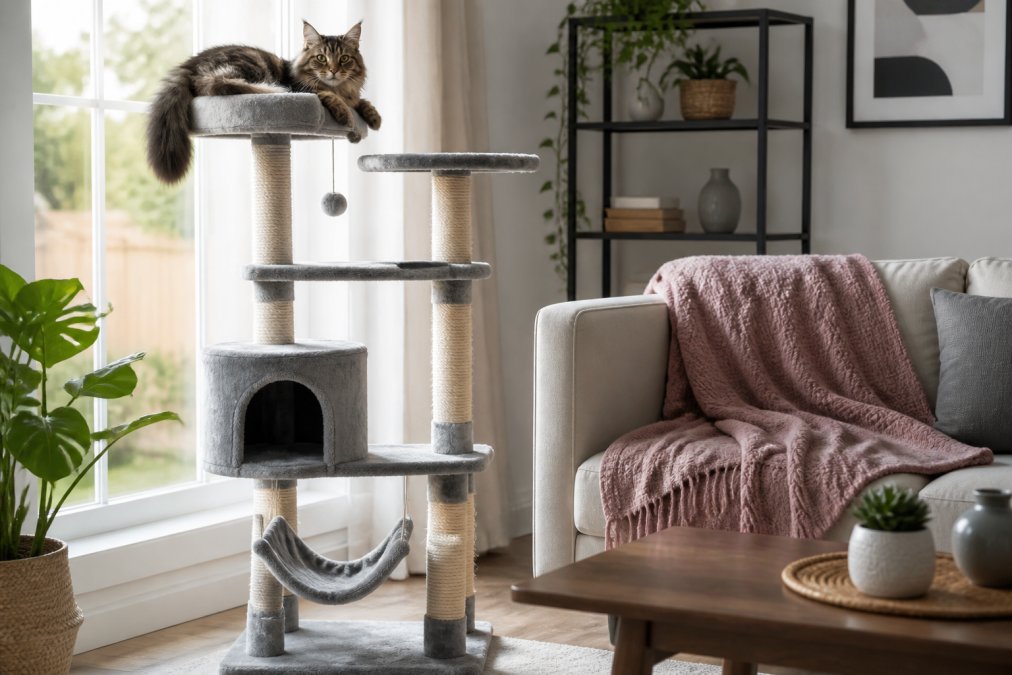
- Cat Tree Tower for Large Cats, 5-Level Condo and Hammock, $49.99. A 56-inch tower with two condos, two top perches with removable plush mats, sisal scratching posts, and a steel-framed hammock. The anti-tip kit and double base matter in a home with a large cat that launches.
- 61" Cat Tree with Condo, Hammock, Perches and Ramp, $59.99. Adds an extra-large ramp for older cats or kittens, plus a two-door condo. The larger footprint suits a corner placement.
- 73.6" Cat Tree with 2 Condos, 2 Hammocks and Scratching Posts, $69.99. The tallest option, tip-resistant, with two condos and two hammocks for multi-cat homes.
Best Furniture for Homes with Pets: Dog Crates and Playpens That Blend In
Dog crates and playpens should read as furniture, not as equipment parked in your living room. The two options below sit in a real room without announcing themselves.
Matching Pet Furniture to Your Living Room Layout and Style
Pet furniture works when it follows the same rules as the rest of the room: consistent color, matching wood tones, and placement that does not block traffic. A rustic brown crate frame sits naturally next to farmhouse storage; a green and dark gray cat tree disappears against a neutral wall. But the bigger opportunity most guides skip is designing the room around your pet's behavior instead of just hiding equipment in it.
Behavioral Furniture Integration: Design Around the Behavior, Not Against It
Most guides treat pet furniture as something to protect your sofa from. The stronger approach is to give the pet a piece that satisfies the behavior, so the sofa is never the target.
- Scratching (cats): give the cat a stable, tall surface with sisal rope or a rough post, and most cats stop using your armrest. A post shorter than the cat's full reach goes unused, so place the scratcher next to the piece the cat already attacks.
- Vertical territory (cats): cats want height to survey a room. A tall cat tree near a window or traffic path gets used; the same tree in a low-traffic corner does not. Vertical space also reduces tension in multi-cat homes by giving each cat a separate perch.
- Containment and denning (dogs): dogs want a den-like space with sightlines. A crate with a solid top and open front reads as a den, while an all-acrylic pen keeps a nervous dog from feeling walled off. A crate that doubles as a side table keeps the den in the room where the family is.
- Ramp-friendly design (older pets and small breeds): a ramp to a favorite perch or onto a low piece lets an older cat or small dog keep using the furniture without jumping, extending the usable life of a piece by years.
- Integrated pet beds: a low drawer or a built-in nook under a console or bench gives a dog a place that is part of the room rather than a bed pushed against a wall.
Eco-Friendly and Pet-Safe Materials
Sustainability and pet safety overlap more than most guides admit, because the same finishes that off-gas are the ones a pet licks or chews.
- Composite wood panels: P2-grade particle board and similar engineered panels are lower-impact than solid hardwood and standard in most flat-pack pet furniture. Look for low- or no-added-formaldehyde grades, since indoor air quality matters in a room a pet occupies daily.
- Finishes and adhesives: water-based finishes and low-VOC adhesives reduce the fumes a pet breathes and may chew. This is the most useful eco-spec to ask about.
- Textiles: solution-dyed synthetics use less water and dye than piece-dyed fabrics and hold color longer, so the piece looks newer and gets replaced less often.
- Durability as sustainability: the most eco-friendly pet furniture is the piece you do not replace. Tight-weave fabric, a steel or hardwood frame, and replaceable covers all extend service life.
Placement Rules That Actually Change Outcomes
Two angles most guides skip. First, place pet furniture where your pet already spends time, not in a spare corner. A cat tree in a low-traffic room goes unused. Second, match material to pet type: cats need vertical space and scratching surfaces, while dogs need floor-level containment and a durable, easy-clean base.
Conclusion
The hard part is not finding pet furniture. It is buying a piece that still looks good after a year of claws, fur, and accidents. Start with a tight-weave, low-pile fabric, add a scratching outlet before your cat picks one, and keep a weekly cleaning routine.
Frequently Asked Questions
What is the best material for furniture if you have pets?
Performance fabrics like tight-weave microfiber and synthetic blends hold up best against claws and shedding. Leather and faux leather resist pet hair and wipe clean easily, but can scratch. For homes with pets, look for stain-resistant, scratch-resistant upholstery with removable, washable covers. Avoid loose-weave linens and delicate natural fibers that snag and trap dander.
How do I keep pet hair off my furniture?
Use a rubber glove or lint roller daily on upholstery, and vacuum with a pet-hair attachment weekly. For embedded hair, a damp sponge or fabric brush lifts strands from tight-weave surfaces. Wash removable cushion covers every two weeks. Choosing low-pile or performance fabric reduces how much hair clings in the first place, making cleanup faster.
Are leather sofas good for homes with pets?
Leather and faux leather repel pet hair and wipe clean with a damp cloth, which makes them a strong choice for shedding pets. However, claws can scratch leather surfaces over time. If you choose leather, look for top-grain or protected finishes and keep nails trimmed. Faux leather offers similar easy-clean benefits at a lower price point.
What furniture features should pet owners look for?
Prioritize tight-weave or low-pile upholstery, removable and washable covers, and stain-resistant finishes. Scratch-resistant materials like microfiber and performance fabric handle claws better than loose weaves. For cat owners, add a dedicated cat tree with sisal scratching posts to redirect scratching away from sofas. For dogs, a furniture-style crate doubles as a side table and keeps the living room layout tidy.
How do I choose pet-friendly furniture that matches modern decor?
Look for neutral tones and clean lines in performance fabrics, which blend into modern living rooms. A rustic brown furniture-style dog crate or a green and dark gray cat tree can function as decor while serving your pet. Measure your living room layout first, then pick pieces that match your existing color palette and scale.